
Trump’s Psychedelics Executive Order: What It Means — and What It Doesn’t Mean
❖ Introduction
Psychedelics have reemerged as one of the most closely watched areas of medical research, public policy, and healthcare innovation. Substances that were once largely associated with counterculture movements are now being studied by leading universities, healthcare systems, and federal agencies for their potential role in treating serious mental health conditions.
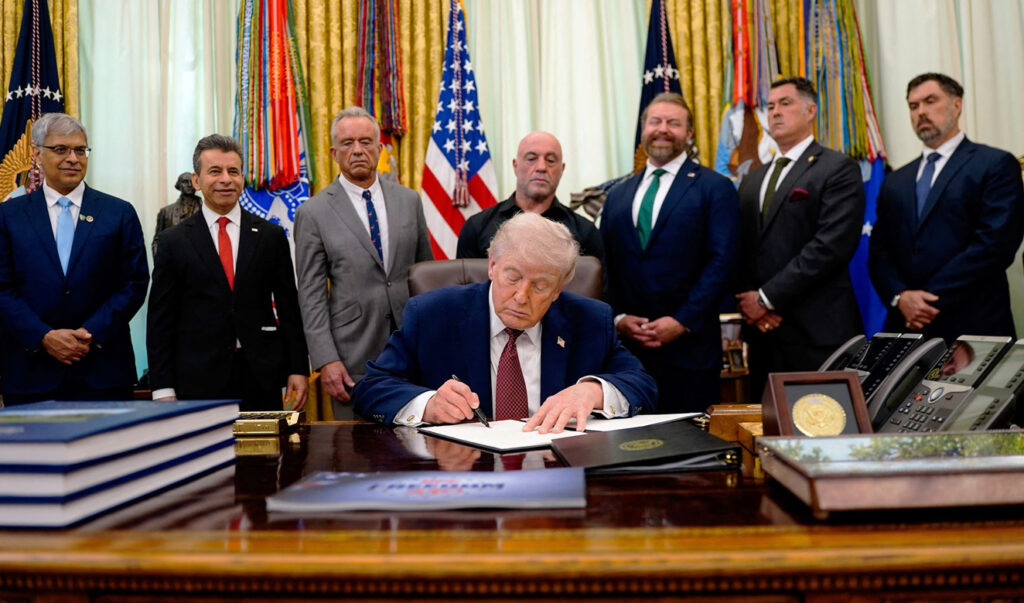
That trend received a significant boost in April 2026 when President Trump signed an executive order directing federal agencies to accelerate access to promising treatments for serious mental illness, including psychedelic-assisted therapies for conditions such as PTSD, depression, and treatment-resistant mental health disorders.
The announcement generated substantial attention from researchers, healthcare providers, investors, and entrepreneurs.
It also generated considerable confusion.
Many headlines and social media discussions have suggested that the executive order represents a major step toward psychedelic legalization. While the order is undoubtedly significant, that characterization oversimplifies what actually happened. For businesses and investors evaluating opportunities in this emerging sector, understanding the distinction is critically important.
❖ What the Executive Order Actually Does
The executive order focuses on accelerating the development, review, and availability of treatments for serious mental illness.
Among other initiatives, federal agencies were directed to:
- Evaluate barriers to treatment access
- Support research into promising therapies
- Identify opportunities to accelerate regulatory review
- Expand treatment options for veterans and others suffering from severe mental health conditions
Psychedelic-assisted therapies received particular attention because of growing research involving:
- Psilocybin
- MDMA
- Ibogaine
- Other emerging psychedelic compounds
The administration’s stated goal is to improve access to treatments that may offer meaningful benefits for individuals suffering from conditions that have proven difficult to treat through conventional approaches. This represents a significant shift in tone from prior decades of federal policy.
❖ What the Executive Order Does NOT Do
This is where much of the public confusion begins.
The executive order does not:
- Legalize psychedelics
- Authorize recreational use
- Create a nationwide psychedelic industry
- Automatically approve psychedelic therapies
- Reschedule schedule i substances
- Eliminate fda requirements
- Override state criminal laws
In other words, the order supports research and regulatory review.
It does not create a commercial psychedelic market overnight.
The distinction is important because many emerging industries have experienced significant disruption when businesses moved faster than regulators. At least for now, psychedelics remain heavily regulated substances subject to substantial legal restrictions.
❖ Why Researchers Are Paying Attention
Despite those limitations, the executive order reflects growing interest in a body of research that has expanded dramatically over the last decade.
Researchers have been studying psychedelic-assisted therapies for conditions including:
- PTSD
- Major depressive disorder
- Treatment-resistant depression
- Anxiety disorders
- Addiction and substance use disorders
Several studies have produced promising results, particularly in patients who have not responded well to traditional treatments.
That does not mean the science is settled.
However, it does explain why policymakers across the political spectrum have become increasingly interested in expanding research and exploring potential treatment pathways.
❖ Why Investors and Businesses Are Watching Closely
The executive order also has important implications beyond healthcare.
Many investors view psychedelic therapies as a potential future regulated industry with similarities to early cannabis markets.
That comparison is imperfect, but understandable.
Potential future opportunities could involve:
- Treatment clinics
- Pharmaceutical development
- Biotechnology companies
- Research organizations
- Healthcare infrastructure
- Training and certification programs
At the same time, businesses should avoid assuming that the psychedelic sector will follow the same path cannabis took over the past decade.
The legal, medical, and regulatory frameworks are likely to develop differently.
Businesses that approach the space thoughtfully will likely be better positioned than those reacting solely to headlines.
❖ Why Massachusetts Businesses Should Pay Attention
Massachusetts is uniquely positioned to participate in emerging conversations surrounding psychedelic therapies.
The Commonwealth already has:
- Sophisticated life sciences infrastructure
- Leading research institutions
- Experienced healthcare providers
- A mature regulated cannabis industry
- Investors familiar with highly regulated markets
As federal policy continues evolving, Massachusetts businesses may find themselves well-positioned to participate in future developments involving psychedelic research, treatment, and compliance.
That does not mean immediate opportunities exist today.
It does mean that industry participants should remain informed about the direction of federal policy.
❖ A Familiar Lesson From Cannabis
For those involved in cannabis, the current psychedelic discussion may sound familiar.
The cannabis industry has repeatedly experienced periods where public perception moved faster than legal reality.
Announcements regarding:
- Legalization
- Rescheduling
- Banking reform
- Federal policy changes
often generated excitement long before practical implementation occurred.
The same dynamic may emerge within the psychedelic sector.
Businesses should distinguish between:
- Research support
- Policy interest
- Regulatory review
and
- Actual commercial authorization
Those are very different things.
❖ Practical Takeaways
Several important lessons emerge from the executive order:
1. Psychedelics Remain Highly Regulated
The executive order does not eliminate existing legal restrictions.
2. Research Is Accelerating
Federal support for additional research and treatment development appears to be increasing.
3. Healthcare May Lead Commercial Development
Unlike cannabis, future psychedelic markets may be driven primarily through medical and therapeutic frameworks.
4. Businesses Should Monitor Regulatory Developments Carefully
The industry remains in an early stage, and regulatory developments may evolve significantly over the coming years.
5. Avoid Decisions Based Solely on Headlines
The most important developments often occur through agency action, clinical research, and regulatory implementation rather than political announcements alone.
❖ Why This Matters
The executive order may ultimately prove to be one of the most significant federal policy developments involving psychedelic therapies in recent years.
Even so, the practical implications are more nuanced than many public discussions suggest.
For researchers, healthcare providers, investors, and entrepreneurs, the announcement signals growing federal interest in exploring alternative approaches to serious mental illness.
What it does not signal is immediate legalization or unrestricted commercialization.
Understanding that distinction is essential for anyone evaluating opportunities in this evolving space.
❖ Final Thoughts
The federal government’s growing interest in psychedelic research reflects a broader shift in how policymakers are approaching mental health treatment, scientific innovation, and emerging therapeutic technologies.
President Trump’s executive order may accelerate research, regulatory review, and future treatment pathways.
But it does not create a legal psychedelic marketplace overnight.
As with many emerging industries, the most successful participants will likely be those who remain informed, patient, and focused on regulatory realities rather than media narratives.
For businesses, investors, and healthcare professionals, this is a space worth watching closely.
If you have questions regarding cannabis law, emerging psychedelic regulation, compliance strategy, or regulated substance business opportunities, contact our office here.
❖ About the Author
Sean Coleman, Esq. is a Massachusetts attorney focusing on cannabis and psychedelics law, hemp regulation, licensing, and regulatory compliance. He works with operators, investors, and municipalities navigating evolving regulatory frameworks involving cannabis and other emerging regulated industries.